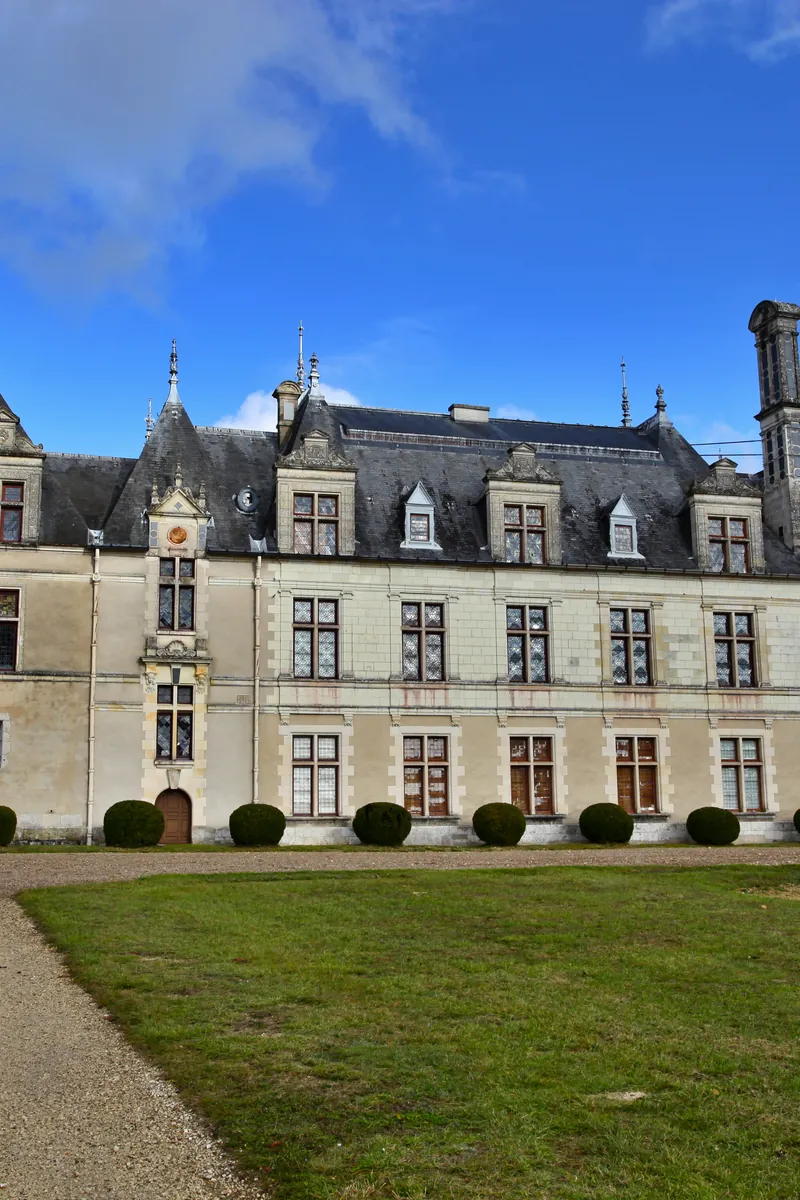
Château de Beauregard stands in parkland just south of Blois, in the heart of the Loire Valley. Built in the 16th century on the site of a hunting lodge used by King François I, it passed through a succession of owners before Paul Ardier — finance minister to three kings, Henri III, Henri IV and Louis XIII — acquired it in 1617 and commissioned the work for which the château is famous today: a gallery of portraits tracing three centuries of French political history.
The Galerie des Illustres runs 26 metres along the château's ground floor and holds 327 painted portraits, arranged in strict chronological order from the accession of Philippe VI of Valois in 1328 to the death of Louis XIII in 1643 — 315 years of kings, queens, ministers and generals in a single room. Above the portraits, a ceiling coloured with powdered lapis lazuli — one of the most expensive pigments of its age — sets off woodwork painted with royal emblems by Pierre Mosnier. Underfoot, 5,600 hand-painted Delft earthenware tiles depict a Louis XIII-era army on the march, tile by tile, the length of the room.
Beyond the gallery, the château's 40-hectare park has been in the care of the same family since the mid-1920s, and includes the Jardin des Portraits — a garden designed by landscape architect Gilles Clément in 1992 as a living echo of the gallery inside, its twelve coloured garden rooms tracing the same 315 years in flowers — and a rose garden of around 100 varieties of old bush roses planted along the château's walls. We handle the ticketing so your date-specific admission is confirmed before you arrive — one less thing to plan once you're touring the Loire.